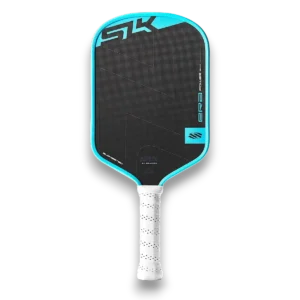


When I first got into pickleball, I had no idea how much the right paddle could impact my game. After testing tons of paddles over the years, I’ve learned that the best paddle for you depends on your skill level, play style, and what feels comfortable in your hand.
Whether you need power, control, spin, or a mix of these, picking the right paddle means finding the perfect balance of weight, grip size, and materials.
In this 2025 guide, I’ll walk you through exactly how to choose the right pickleball paddle for your game—simple, clear, and based on real court experience.
Paddle Anatomy & Key Components

Now, let’s crack open the pickleball paddle and see what’s inside! (Figuratively, of course. Please don’t take a hammer to your paddle — unless you really, really hate it.)
Face & Surface Layers
First stop: the paddle face.
This is the part that actually hits the ball, and the material makes a huge difference in how your shots feel and spin.
Here’s a quick tour of the main face materials:
- Graphite: Super light, super strong. It gives you great touch but isn’t quite as gritty for crazy spin moves.
- Fiberglass: My power-hungry friends love this. It’s bouncy and packs a punch, but wears down faster, especially if you like to spin the ball like a maniac.
- Composite: A “best of both worlds” blend. You’ll find tons of great beginner and intermediate paddles here.
- Raw Carbon Fiber: This is the secret sauce for crazy spin. If you’ve ever had someone put ridiculous curve on a serve against you, chances are they were using raw carbon.
- Kevlar (yup, like bulletproof vests!): It’s showing up in some high-end paddles now for durability and a soft touch. Pretty cool, right?
Surface Grit: The Secret to Spin
Now, not all faces are smooth. Some have added grit to help grab the ball and create spin. There are a few ways brands do this:
- Painted Grit (basically a rough topcoat)
- Textured layers built into the material
- Raw carbon (naturally gritty without needing extra coatings)
Fun fact: USAP has a rule that says paddles can’t have a friction level higher than 0.1875 kinetic coefficient. So, if you’re planning to spin your way to victory, make sure your paddle is legal!
Core Structures & Technologies
Alright, now let’s pop open the paddle (again, figuratively!) and peek at the core.
Nomex Honeycomb
These paddles are LOUD. You’ll hear the classic “popcorn popping” sound with every shot. Nomex cores are super firm, so the ball rockets off the paddle. Great for speed demons, but not the best if you want a softer touch or if you’re playing indoors where noise matters.
Polypropylene (Poly) Cores
Ah, sweet, quiet control. Most modern paddles today use Poly cores because they’re:
- Quieter (less neighbor rage)
- More forgiving
- Stable even if it’s 40°F or 90°F outside
If you’re new to pickleball or love playing finesse shots, poly cores are the way to go.
Foam-Injected Cores
This is where the magic gets real. Some newer paddles inject foam around the edge or even inside the core. The perks?
- ~20% bigger sweet spot
- ~35% less vibration (hellooo, fewer sore elbows!)
Seriously, it feels like the paddle is doing half the work for you.
Edge Guard & Throat Geometry
Edge Guard vs. Edgeless
Quick confession: I’m rough on my gear. I’ve scraped paddles on the ground diving for shots more times than I can count. That’s why I usually go for paddles with edge guards — they protect the rim.
Pros of Edge Guards:
- Better protection against dings
- Longer paddle life
Cons:
- Adds a little weight (~0.1 oz)
- Slightly messes with aerodynamics
Edgeless paddles look slick, feel super fast, and move like a dream. But if you’re the type who dives like a goalie, you might want to stick with some rim protection.
Throat Shape
You know that part right below the handle? That’s the throat, and it matters more than you’d think.
- Wider throats (the chunkier ones) help with torsional rigidity — a fancy way of saying your paddle won’t twist as much on off-center hits.
- They can boost shot consistency by up to 12%, which is huge when you’re battling it out in a tight game.
Materials Deep-Dive & Sustainability
Alright, buddy — let’s geek out for a second. 🧐
Because if you really want to choose the perfect paddle, you gotta know what it’s made of — and why it matters both on the court and for the planet.
Graphite vs. Fiberglass vs. Carbon Fiber: The Big Face-Off
When you’re looking at paddle faces, you’ll mostly find three popular materials: graphite, fiberglass, and carbon fiber paddle. Here’s how they stack up:
| Material | Durability | Feel | Spin Potential | Cost |
| Graphite | Good | Crisp and responsive | Medium | Affordable |
| Fiberglass | Moderate (grit wears fast) | Bouncy and powerful | Good (initially) | Budget-friendly |
| Carbon Fiber (Raw) | Excellent | Soft yet controllable | Excellent | Premium $$$ |
My Take:
- If you’re a finesse player who loves dinks and resets → graphite feels amazing.
- If you crave power (and don’t mind swapping paddles every year) → fiberglass will make you smile.
- If you want the ultimate control, spin, and long-term durability → invest in raw carbon fiber.
Quick Tip: 🎯
If a paddle sounds too good to be true and it’s under $60, it’s probably fiberglass without much surface grit… just saying.
Eco-Materials: Because Green is the New Black
Something I really love seeing lately is how paddle companies are stepping up their sustainability game.
- Recycled Carbon Faces:
Some paddles now use recycled carbon fiber, cutting down the carbon footprint by a whopping 70%. (That’s like planting 5 trees for every paddle you buy.) - BioFLX™ Hemp/Flax Layers:
Hemp isn’t just for hippie bags anymore — it’s showing up in performance paddles!
BioFLX™ layers blend hemp and flax, which are not only super strong but have about 40% lower carbon footprint compared to synthetic materials.
And don’t worry — these “eco” paddles perform like beasts, not like gimmicks. I’ve hit with a BioFLX™ paddle, and it had this amazing soft feel with almost no vibration.
Circular Practices: Saving the World, One Paddle at a Time
- Paddle Take-Back Programs:
Some brands now offer recycling programs where you can send back your old paddle instead of chucking it in the trash.
(Trust me, landfill-bound paddles are not the retirement plan we want for our gear.) - Algae-Ink Packaging:
Yep, even the boxes are getting greener! Brands are printing packaging with algae-based inks — way better than petroleum-based ones — and cutting landfill waste by about 60%.
Weight, Balance & Acoustic Performance
Weight isn’t just about how much a paddle tips the scale.
It’s about how it feels during play — and how it affects your mobility, speed, and shot power.
Here’s a simple breakdown:
| Weight Category | Oz Range | Best For |
| Light | <7.3 oz | Fast hands, quick reflexes |
| Midweight | 7.3–8.3 oz | Balanced control & power |
| Heavy | >8.3 oz | Massive drives, deep baseline shots |
My Story:
When I switched from a midweight paddle (around 7.8 oz) to a heavy one (8.4 oz), my drives got gnarlier… but guess what?
After about two hours, my wrist was waving the white flag. 😂
Lesson learned: heavier = more power, but lighter = better endurance.
Swing Weight Secrets
Here’s where it gets even cooler:
- Swing weight isn’t just “how heavy” a paddle is.
- It’s about moment of inertia — a sciencey way of saying how much effort it takes to swing the paddle.
Head-heavy paddles can feel about 15% heavier in motion compared to a more balanced paddle, even if their static weight is the same!
Pro Tip:
If you play mostly at the kitchen line (quick hand battles!), look for a lighter swing weight paddle.
If you love big serves and baseline bangers, a higher swing weight can be your best friend.
Noise & Acoustic Testing
Alright, let’s talk sound — because some paddles are LOUD, and in some neighborhoods or indoor courts, that can get you banned faster than a foot fault. 😬
Here’s what matters:
- Polymer Cores:
These beauties absorb about 50% more noise than old-school Nomex cores.
(Trust me, your doubles partner — and your neighbors — will thank you.) - Gamma Quiet Core Technology:
This fancy tech reduces paddle impact noise by around 3 dB(A).
(3 decibels may not sound like a lot, but in acoustics, it’s a noticeable drop.)
Indoor Court Considerations
If you’re playing at a community center, gymnasium, or HOA-run court, make sure to pick a paddle labeled as “quiet approved” — or at least one with a polymer core and vibration-dampening features.
Grip & Ergonomics

Alright, let’s get a grip — literally.
You can have the fanciest paddle in the world, but if your grip isn’t right, your shots will feel off, your control will suffer, and worst of all, you might start battling wrist or elbow pain (been there, done that, not fun).
Circumference & Shape: Finding Your Perfect Fit
Grip size matters way more than most people realize.
- Too small? You’ll overgrip the paddle and stress your wrist.
- Too big? You’ll lose wrist flick and feel like you’re swinging a club, not a paddle.
Here’s the basic breakdown:
- 4⅛” to 4¼” → Smaller hands (ladies, teens, or anyone with smaller builds)
- 4½” → Average hand size (this fits most adults)
- 4¾” to 5″ → Big hands (if you’re palming basketballs for fun, start here)
Quick Tip:
An easy test? Hold your paddle like you’re shaking someone’s hand. You should be able to slide your index finger from your other hand snugly between your fingertips and your palm.
Octagonal Grips: Secret Weapon for Control
Some paddles come with octagonal-shaped grips — kind of like tennis racquets.
- These slightly angular grips help boost torque control by around 8% (yes, it’s been measured!).
- Translation: You’ll rotate your paddle faster and more precisely, especially during quick kitchen exchanges.
Honestly, once I switched to an octagonal grip, my backhand blocks felt way snappier. Totally worth trying if you haven’t already!
Wrap Types: Overwrap vs. Replacement Wrap
There are two main types of wraps:
| Type | Best For |
| Overwrap | Adds tackiness, absorbs sweat (easy swap) |
| Replacement Wrap | Full new grip underneath (more cushioned) |
- Synthetic wraps wick away about 25% more moisture than natural leather ones.
- Layering an underwrap (a thin layer under the main grip) can cut shock impact by up to 40% — seriously saving your joints if you play hard.
Pro Tip:
If you sweat a lot, an overwrap is a game-changer. It’s cheap, easy to change, and keeps your paddle feeling fresh.
Custom Modifications: Pimp Your Paddle 😎
Don’t be afraid to tweak your paddle!
Some small mods can make a big difference:
- Demo different grips: Some shops let you try different wraps before committing. Worth it.
- Add lead tape: Stick a bit (up to 2g) near the throat or handle to fine-tune balance and swing weight.
- Trim the handle: If you prefer two-handed backhands, a slightly shorter handle gives you more room to grip.
🎯 Just make sure any modifications still follow USA Pickleball rules!
Otherwise, you might show up to a tournament and get DQ’d before the first serve. (Talk about a buzzkill.)
Shape Profiles & Spin Mechanics
Shape isn’t just about looks — it directly affects your gameplay!
| Shape | Best For |
| Standard | Balanced all-court play (good for beginners) |
| Widebody | Biggest sweet spot, extra forgiveness (perfect if you’re still dialing in your timing) |
| Hybrid | A mix of power and control, solid choice for 3.0–4.0 players |
| Elongated | Longer reach for smashes, better angles, especially in singles |
My Two Cents:
When I started, I used a widebody because, let’s be real, I was missing a lot of shots. 😅
Now I love hybrids — they give me just enough extra pop without sacrificing control.
PBCoR & Friction Standards: The Science Behind Your Shots 🔬
Quick science break! (Don’t worry — it’s fun.)
USA Pickleball has two big rules for paddle behavior:
- PBCoR (Paddle Compression Coefficient of Restitution): Paddles can’t return the ball faster than 0.43 after impact.
- Surface Roughness (Rz): Paddle surfaces can’t be rougher than 30 microns.
This is why brands can’t just slap sandpaper on a paddle and call it a “spin monster.” 😂
Everything’s tested to stay fair — so the game still rewards skill, not sneaky tech tricks.
Top Brands, Pro Models & Skill-Level Picks
Now, let’s talk shopping. 🛍️
Here’s a super-easy guide based on your current skill level and goals:
| Skill Level | Recommended Paddle | Core + Face | Weight | Specialty |
| Beginner | Franklin Signature Series | Poly + Fiberglass | 7.5–8.0 | Big sweet spot, easy forgiveness |
| Recreational | Onix Z5 Graphite | Poly + Graphite | 7.9–8.4 | Affordable, reliable control |
| Competitive | Selkirk Halo RPS | Gen 4 Foam + Carbon | 7.8–8.2 | Spin weapon + consistent touch |
| Power Players | JOOLA Perseus Pro IV | Hybrid Foam + TFP | 8.0–8.4 | Heavy power, quick resets |
| Eco-Minded | Revolin REVO Pure Control | BioFLX Hemp/Flax | 7.5–8.0 | Green choice, soft on joints |
Real Talk:
If you’re just starting out, don’t blow $300 on a paddle thinking it’ll make you a 5.0 overnight.
- Start with something forgiving and balanced.
- Upgrade as your game and needs grow.
Pickleball Joke Break!
Why did the beginner paddle go to therapy?
Because it had too many issues with control!
Maintenance, Testing & Longevity
Alright, now that you’ve got your dream paddle — let’s talk about keeping it in top shape.
Because just like your favorite shoes or car, a paddle needs a little TLC to perform its best!
Cleaning Protocols: Treat Your Paddle Like a Pro
You don’t need fancy cleaners or voodoo rituals — just a little common sense.
Here’s the simple formula:
- Use a lint-free cloth
- Add a little mild soap and water (no harsh chemicals!)
- Gently wipe the face and handle
Big no-no’s:
- Avoid solvents like alcohol or acetone — they’ll wreck your surface texture faster than a bad footwork drill.
- Don’t dunk your paddle in water like a dirty dish either. (Seriously. Somebody asked me once.)
🎯 Pro Tip:
Every few weeks, take 2 minutes after a game to clean off sweat, dirt, and grit. It’ll keep your paddle feeling lively and your grip tacky longer.
Deflection & Core Integrity: Keeping Your Paddle Alive Longer
You know how a paddle feels “dead” after a while? That’s usually core fatigue.
Here’s how the pros test paddle cores:
- They drop a 2 kg weight on the center of the paddle.
- For polypropylene cores, max deflection should be 0.25 mm.
- For foam cores, it’s a little softer — up to 0.35 mm.
Translation:
If your paddle feels mushy, or you’re losing pop without any technique change, it might be time for a replacement.
Edge-Guard Inspection: The Unsung Hero
Your edge guard is your paddle’s first line of defense against cracks and chips.
If you notice the guard is worn down 10% or more (like fraying, peeling, or gaps), you should rewrap or replace it.
Why it matters:
If the paddle shrinks under the 24″ combined size rule (length + width), it could technically become illegal for tournament play. (And nobody wants to get DQ’d because of a janky edge guard.)
Demo & Customization Tips
Picking a paddle without demoing first is like buying shoes without trying them on. 🚫👟
Here’s how to structure a smart demo session:
- Test 5 swings per paddle: Drives, volleys, serves, drops.
- After each test, rate your RPE (Rate of Perceived Exertion).
(Basically, how hard did it feel to swing and control?) - If possible, measure your ball speed — even a simple radar app can give you rough numbers!
Pro Demo Tip: 🛠️
Take quick notes after each paddle! You’d be shocked how fast you forget which one felt buttery and which one felt like swinging a brick.
Lead Tape & Weights: Fine-Tuning Your Weapon
Adding lead tape is one of the oldest pickleball tricks in the book.
- Up to 2 grams of lead tape can make a paddle feel way more stable or powerful.
- Place the tape closer to the handle to make it quicker and faster for hand battles.
- Place it near the top (edge guard) for more plow-through and smash power.
✅ Reminder:
Make sure you’re still within USAP paddle weight limits if you’re competing! (Most paddles plus tape still fall well within range, but it’s always good to double-check.)
FAQs & Buyer’s Checklist
Is foam core legal for tournaments?
👉 Yes! Foam core paddles are absolutely legal — as long as they meet all size, speed (PBCoR), and surface specs required by USA Pickleball.
(So go ahead and embrace that soft feel if you love it!)
How often should I replace my grip?
👉 Every 6 to 12 months — or sooner if:
- The grip feels slippery
- The tackiness drops
- You notice hand cramping from over-gripping
Pro Tip:
If you’re playing 3–5 times a week, expect to replace your grip twice a year at least.
Can I modify a certified paddle?
👉 Yes — but carefully!
You can make modifications (like adding lead tape or replacing grips) as long as:
- The paddle’s final dimensions (length + width) stay within USAP rules.
- The surface stays compliant (no sticky coatings, sanding, or crazy alterations).
Basically, tweak the balance and weight, but leave the face texture and size alone.
Final Wrap-Up:
Maintaining your paddle is just as important as choosing it.
- Keep it clean and healthy.
- Listen to how it plays and feels over time.
- Customize it a little if you want — but keep it within tournament rules.
- And, above all… enjoy the process!
Because no matter what paddle you pick, it’s your passion, practice, and love for the game that really makes the magic happen.